
Introduction
Solar power is at the heart of India’s clean energy transformation. With rapid adoption by apartments, industries, hospitals, and commercial complexes, understanding the fundamentals of solar technology has never been more crucial.
This guide is your step-by-step playbook — from how solar works to government incentives, installation, financing, and future trends shaping India’s solar mission.
📘 What you’ll learn:
- How solar technology converts sunlight into electricity
- The types of solar power plant systems and which one suits your needs
- How to plan, finance, install, and maintain your solar setup
- Latest government subsidies and state policies
🗺️ Explore detailed solar installation guides and subsidy updates at IndiaSolarMission.com
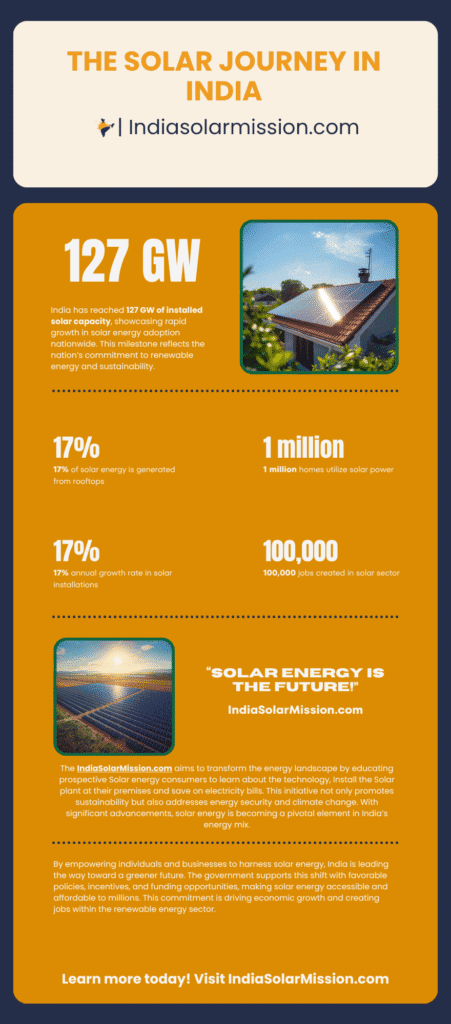
What is Solar Technology?
Solar Panels installed on the roof or ground absorb the sunlight. It is then converted into a DC and either stored in a battery for later consumption or supplied to an inverter. An inverter converts the DC into AC, which powers the appliances or load at the site. Any excess Energy is supplied back to the grid via a net meter. This process is called Net Metering. With Net metering, you are only charged for what you consume after accounting for the energy you supply back to the grid.
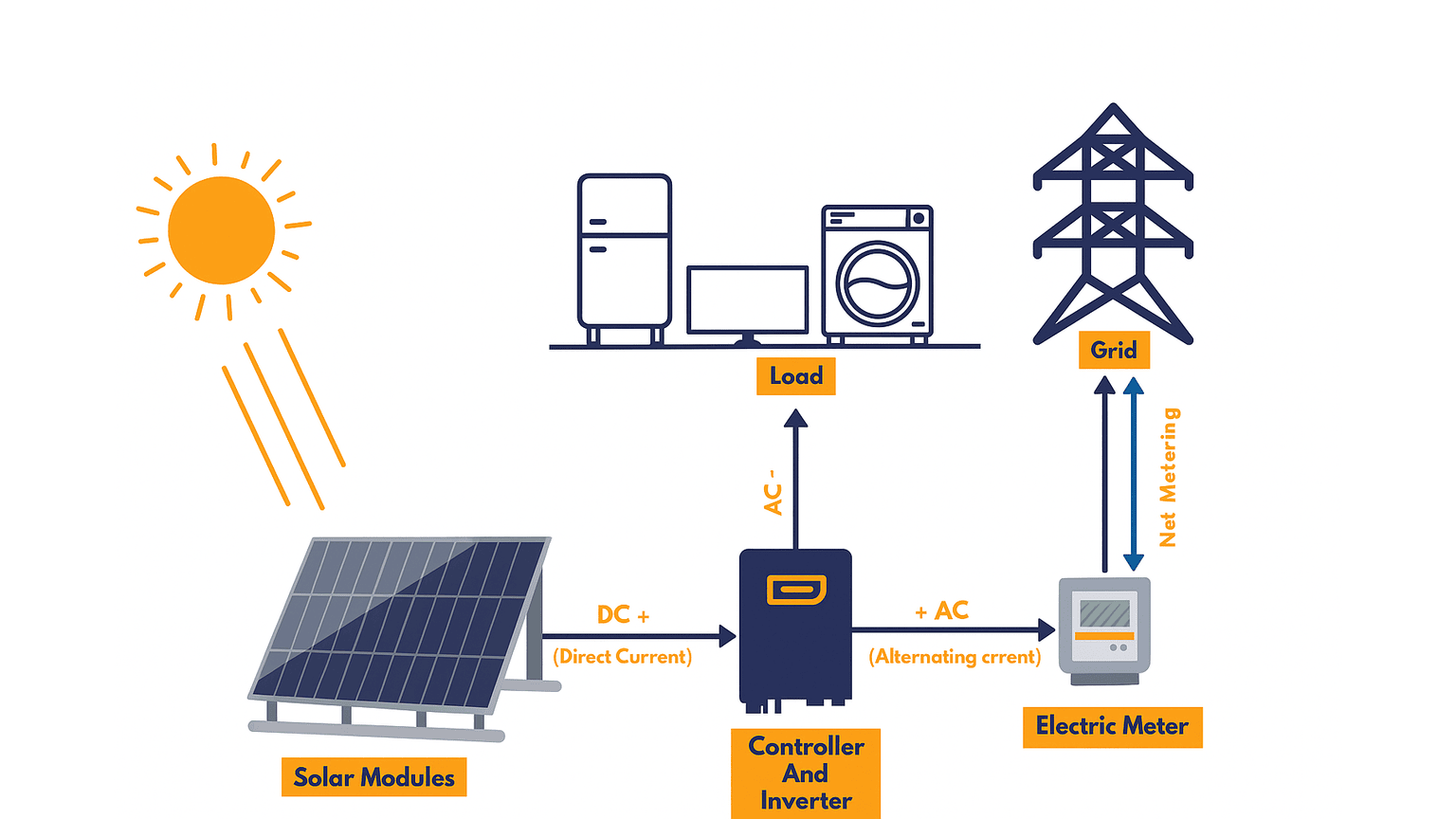
Core Components of a Solar Power System:
- Solar Panels: Convert sunlight into direct current (DC) electricity. Refer to the detailed Solar Panels Guide here to choose the right panel for your use.
- Inverters: Transform DC into alternating current (AC) for your appliances. Suggested to read the detailed Inverters guide here
- Batteries: Store surplus power for backup. Here’s a detailed guide on Batteries for Solar to understand more.
- Mounting & Wiring: Ensure structural and electrical integrity.
💡 Example: A 5 kW rooftop system for home in Hyderabad generates ~20 units/day — cutting electricity bills by ₹1 lakh per year.
🔗 Learn more: How Solar Energy Works in India | Complete Overview
Types of Solar Technologies
India primarily uses two kinds of solar systems — Photovoltaic (PV) and Thermal — each suited to different needs.
🔹 Photovoltaic (PV) Systems
- Monocrystalline Panels: Highest efficiency (18–22%); best for limited rooftops.
- Polycrystalline Panels: Economical, moderate efficiency (15–18%).
- Thin-Film Panels: Lightweight, good for large industrial sheds.
Read our detailed guide on Solar Panels here
🔹 Solar Thermal Systems
Convert sunlight to heat for water or industrial steam — common in hospitals, hotels, and canteens.
🔹 Emerging Technologies
- Bifacial Panels: Generate power on both sides.
- Perovskite Cells: Experimental high-performance material.
- Solar Trackers: Rotate panels to follow the sun and improve yield by 15–25%.
🔗 Compare top-performing panels: Best Solar Panels in India 2025 (Monocrystalline vs Polycrystalline)
How Solar Power Works
- Sunlight hits solar panels → generates DC power.
- Inverter converts DC → AC.
- Electricity powers loads; surplus is stored in Batteries or exported via net metering.
System Configurations:
- Grid-Tied Systems: Feed surplus to DISCOM grid (most cost-effective).
- Off-Grid Systems: Ideal for power-deficient rural zones.
- Hybrid Systems: Combine both with storage for reliability.
🔗 Explore details: Grid-Tied vs Off-Grid Solar Systems Explained
Solar Power Applications for Different Premises
🏢 Apartments
Shared solar rooftops, energy monitoring, and virtual net metering help reduce bills by 30–50%.
🔗 Solar for Apartments in India | Step-by-Step Setup & Savings Guide
Government Policies and Incentives in India
India’s National Solar Mission targets 500 GW renewable capacity by 2030 — offering multiple incentives:
- MNRE Subsidy (2025): Up to 40% for residential systems ≤3 kW.
- Accelerated Depreciation: 40% for industrial setups.
- Net Metering: Offload surplus power for bill credits.
📄 Example: A 5 kW system in Maharashtra can save ₹1.2 lakh annually post-subsidy.
🔗 Government Solar Subsidy & Policy Guide (State-Wise 2025)
Financing Your Solar Project
Solar adoption doesn’t always require a heavy upfront investment. Depending on your use case there are innovative financing models.
Popular Financing Models:
- Solar Loans: Offered by SBI, Axis, HDFC, and Tata Capital (8–10% ROI).
- CAPEX Model: You invest the capital required to set up the Solar Power Plant at your premises (be it hospitals, Industries, Apartments, Schools etc) and reap the full benefits of it.
- RESCO Model: a zero-investment model where a third-party developer (the RESCO company) invests in, installs, and maintains a solar plant on a consumer’s rooftop or space.
ROI Snapshot:
💰 Payback: 3–6 years | Annual Returns: 20–25%
🔗 Explore options: How to Finance Solar in India | Loans, Leasing & Subsidies
Installation Process: Step-by-Step
- Site survey & design finalisation
- Mounting structure setup
- Panel & inverter installation
- Electrical testing & safety inspection
- Net metering connection & commissioning
🧰 Ensure all components are BIS-certified and installed as per CEA standards.

🔗 Solar Installation Process in India | Complete Walkthrough
Maintenance and Troubleshooting
Routine maintenance ensures optimal efficiency:
- Clean panels every 15–30 days.
- Check cables, MC4 connectors, and inverter logs.
- Use monitoring dashboards to detect anomalies early.
Common issues: Dust buildup, inverter shutdowns, and bird droppings.
🔗 Solar Maintenance & Troubleshooting Tips | Maximize System Life
Benefits of Adopting Solar Technology
✅ 70–80% electricity bill savings
✅ 1.2 tons CO₂ reduction per kW annually
✅ 25-year system life
✅ Enhanced property value and ESG score
🔗 Top 10 Benefits of Going Solar in India (2025 Edition)
Future Trends in Solar Technology
- AI & IoT-powered energy analytics
- Bifacial + Storage combos for peak-hour resilience
- Perovskite breakthroughs for ultra-high efficiency
- Integration with EV charging networks
🔗 Future of Solar in India | Innovations & Predictions 2030
FAQs about Solar Technology
Q1. What is the lifespan of solar panels?
25 years or more with <0.5% annual degradation.
Q2. Do solar panels work during cloudy days?
Yes, at 10–25% of normal output.
Q3. How much area do I need for 1 kW of solar?
~100 sq. ft., depending on panel type.
Q4. What happens during power cuts?
Hybrid and off-grid systems continue powering essentials.
🔗 More FAQs: Cost, Warranty & Subsidy Details
Conclusion
Solar is India’s fastest-growing and most rewarding renewable investment. Whether you’re powering an apartment complex or industrial facility, the shift to solar means savings, stability, and sustainability.
🌞 Ready to explore your options?
🔗 Compare Solar Solutions in India | Get Expert Help
Call to Action
✅ Get a Free Solar Consultation – Find your best-fit system and savings potential.
✅ Use Our Solar Calculator – Estimate ROI instantly.
✅ Stay Updated – Subscribe for the latest subsidy and technology news.
👉 Start your solar journey now at IndiaSolarMission.com
Checkout